
11 minute read •
TW: This article contains images including racist stereotypes, symbols and slogans.
In late 2016, posters appeared on American university campuses showing a black-and-white photograph of the Apollo Belvedere’s head above the slogan “Our Future Belongs to Us.”[i] They were produced by Identity Evropa, a white nationalist group that used appeals to cultural heritage to attract recruits. Across the “trad” internet, an online culture that idealises traditional hierarchies, Greek sculpture has become a means of presenting fascist sympathies as attachment to classical values. Its rallying cry, “RETVRN,” spelled with the Roman V, calls for a return to an imagined pre-modern order of fixed gender roles and natural hierarchy, and typically accompanies images of classical statues and architecture.[ii] Such imagery allows extremist ideas to pass as aesthetic preference; as Richard Spencer, former head of the white supremacist think tank the National Policy Institute (NPI), claimed in 2016, “We ‘memed’ alt-right into existence.”[iii]
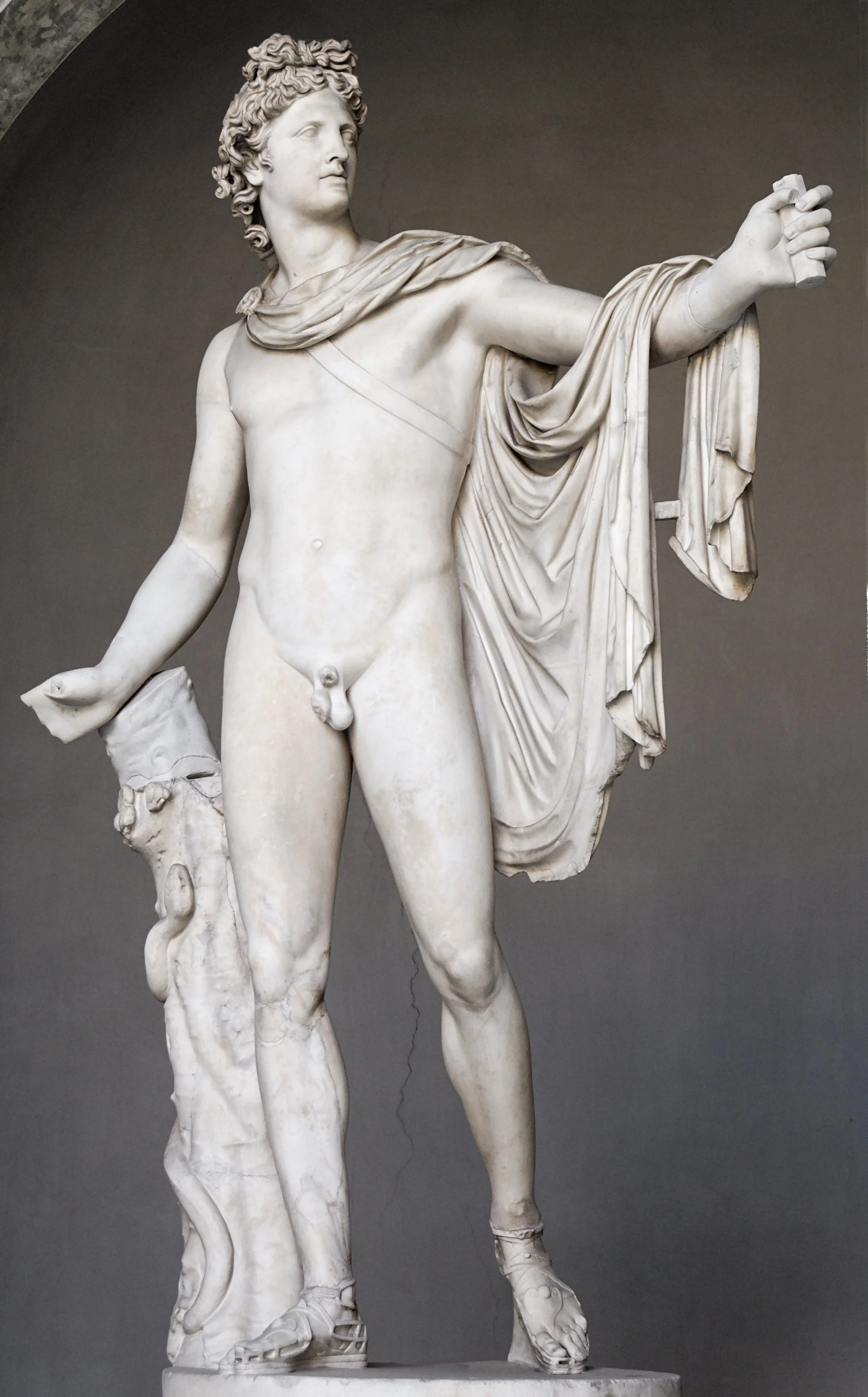
Figure 1: Apollo Belvedere, Roman, probably second century AD, marble, h. 2.24 m. Museo Pio-Clementino, Vatican Museums, inv. 1015. Photograph: Marie-Lan Nguyen. Public Domain.
The head on the poster belongs to a marble statue displayed in the Vatican since 1503 (figure 1). The sculpture is conventionally identified as a second-century Roman copy of a lost Greek bronze, possibly by the fourth-century BC Athenian sculptor Leochares. However, Carol Mattusch has pointed out that it is the only surviving ancient statue of its kind, and has asked whether it might instead be a Roman creation in a Greek idiom: a “copy” without a demonstrable original.[iv] Therefore, the poster’s appeal to an idealised past depends on an image of uncertain origin. This reflects how Greek sculpture was already an idealised point of reference for the Romans who copied, adapted, and collected it, so the past the poster invokes has been filtered through emulation from the very beginning. Between the presumed Greek bronze Apollo Belvedere and the figure in the poster, metal became marble, pigment was lost or removed, the figure was reduced to its head, and the head to greyscale, each step stripping away the material and historical specificity that might resist appropriation.
A common response is to emphasise that ancient sculpture was originally painted.[v] However, this correction does not necessarily diminish the image’s appeal as a symbol of the supremacy of whiteness. Painted skin has also been claimed as white: the white nationalist website VDARE responded to the research with the headline “Ancient sculptures weren’t white, they were pink!” Reconstructions remain interpretations, and restored colour is frequently dismissed as gaudy, as though painted sculpture distorted the white version rather than preceding it.[vi]
The more significant issue in the debate over whitewashed Greek statuary is therefore the modern construction of classical whiteness rather than the recovery of ancient sculpture’s original colour. Focusing on pigment alone risks accepting the premise that the statue’s whiteness is fundamentally a question of skin colour. Johann Joachim Winckelmann’s History of the Art of Antiquity (1764), widely regarded as one of the founding texts of art history as a discipline, also helped establish white marble as an aesthetic ideal. In it, whiteness emerged through a process of abstraction, the progressive removal of colour and particularity, and the sublimation of desire: whiteness by subtraction. Three meanings of whiteness must be considered – the physical whiteness of marble and plaster, the formal purity of an ideal stripped of particular characteristics, and whiteness as a racial category. Classical sculpture’s ideological power lies in the movement between them, through which a historically constructed aesthetic ideal acquires the apparent authority of an enduring truth about Western identity.
Winckelmann distinguishes between the physical whiteness of sculpture and the abstract qualities of ideal beauty. Colour, he writes, “contributes to beauty, but it is not beauty itself.” A body appears more beautiful the whiter it is because white reflects the greatest amount of light, just as “all newly formed gypsum figures seem larger than the statues from which they were cast.” Therefore, at the moment that whiteness is established as a standard, it is located in a reproduction, the plaster cast. However, he does not equate beauty exclusively with white skin, acknowledging that a “Moor” may be beautiful and considering the head of Scipio in dark basalt superior to three marble versions. On the preceding page, he praises those who study antiquity without being “dazzled by whiteness of skin.” His conception of beauty rests instead on “unspecifiability.” Beauty should not belong to a particular individual or express any single passion, as these would “mix foreign features into beauty.” He compares this ideal to “the purest water drawn from the source of a spring: the less taste it has, the healthier it is seen to be, because it is clear of all foreign particles.”[vii] Beauty is therefore defined by negation in the removal of qualities associated with custom, climate, and individuality.[viii] The ideal appears universal because it excludes the features that distinguish one body from another.
This might suggest that Winckelmann’s preference was purely aesthetic, acquiring racial significance only later. However, by presenting beauty as the absence of particular characteristics, the ideal already sets a universal standard against which other bodies appear as deviations. On the same page that praises those undazzled by white skin, Winckelmann describes “the thick, pouting mouth that the Moors have in common with the apes in their land” as “a superfluous growth.”[ix] His apparent acceptance of differences in skin colour therefore coexists with an explicitly racialised judgement of bodily form. Frantz Fanon later identified this asymmetry when he observed that “not only must the black man be black; he must be black in relation to the white man,” a relationship that, he insists, has no equivalent in reverse.[x]
The same abstraction also informs the construction of gender. In Winckelmann’s History, the male nude is the standard of ideal beauty, its perfection residing in unadorned form. By contrast, the female figure is the exclusive concern of the appendix on drapery and adornment, where her appearance is defined through the addition of material and ornament. Therefore, the male body is treated as the norm and the female body as a supplement to it, a structure that recalls Simone de Beauvoir’s argument that woman is defined as the “Other” in relation to man.[xi] Colour, too, has historically been associated with femininity.[xii] The contemporary association of whiteness with masculine strength thus draws upon distinctions already embedded in the aesthetic principles through which the classical ideal was established.
This structure explains the ideal’s political adaptability. Winckelmann attributed Greek beauty to the freedom of the city-state, a claim that Jacobin artists subsequently adapted into a programme for the modern republic.[xiii] The same ideal also sublimated desire, allowing Winckelmann to contemplate living male bodies as though they were statues, admiring their physical beauty while disavowing the implications of erotic attraction.[xiv] Two centuries later, American physique magazines drew upon classical poses and references to represent the male body within the restrictions imposed by censorship.[xv] The classical figure that came to inform ideals of normative, and later fascist, masculinity was therefore also shaped by homoerotic desire at its source.[xvi] The Jacobin citizen, the connoisseur, and the fascist athlete each invest the classical body with different values while preserving its function as a standard of distinction, separating the free from the unfree, the cultivated from the uncultivated, and the healthy national body from those constructed as its enemies.[xvii] The classical ideal is therefore never politically neutral, as its apparent universality depends on the hierarchies established through its very conception.
However, an ideal defined by absence depends on those it excludes, figures constructed as its opposites: the Jewish person, the effeminate man, and the racial outsider.[xviii] During the nineteenth century, this distinction was drawn literally. In Josiah C. Nott and George Gliddon’s Types of Mankind (1854; figure 2), the Apollo Belvedere occupies the highest position in an illustration descending through a “Creole Negro” to a “Young Chimpanzee.”[xix] Winckelmann’s aesthetic ideal was thus incorporated into systems of racial classification that presented historically constructed standards as biological fact. The same distinction governed the permissibility of nakedness. Nudity that was read as ideal in the Greek male was read, in the bodies of peoples subjected to European colonial rule, as evidence of a lack of civilisation.[xx] Subtraction was a virtue in marble and a deficiency in flesh.
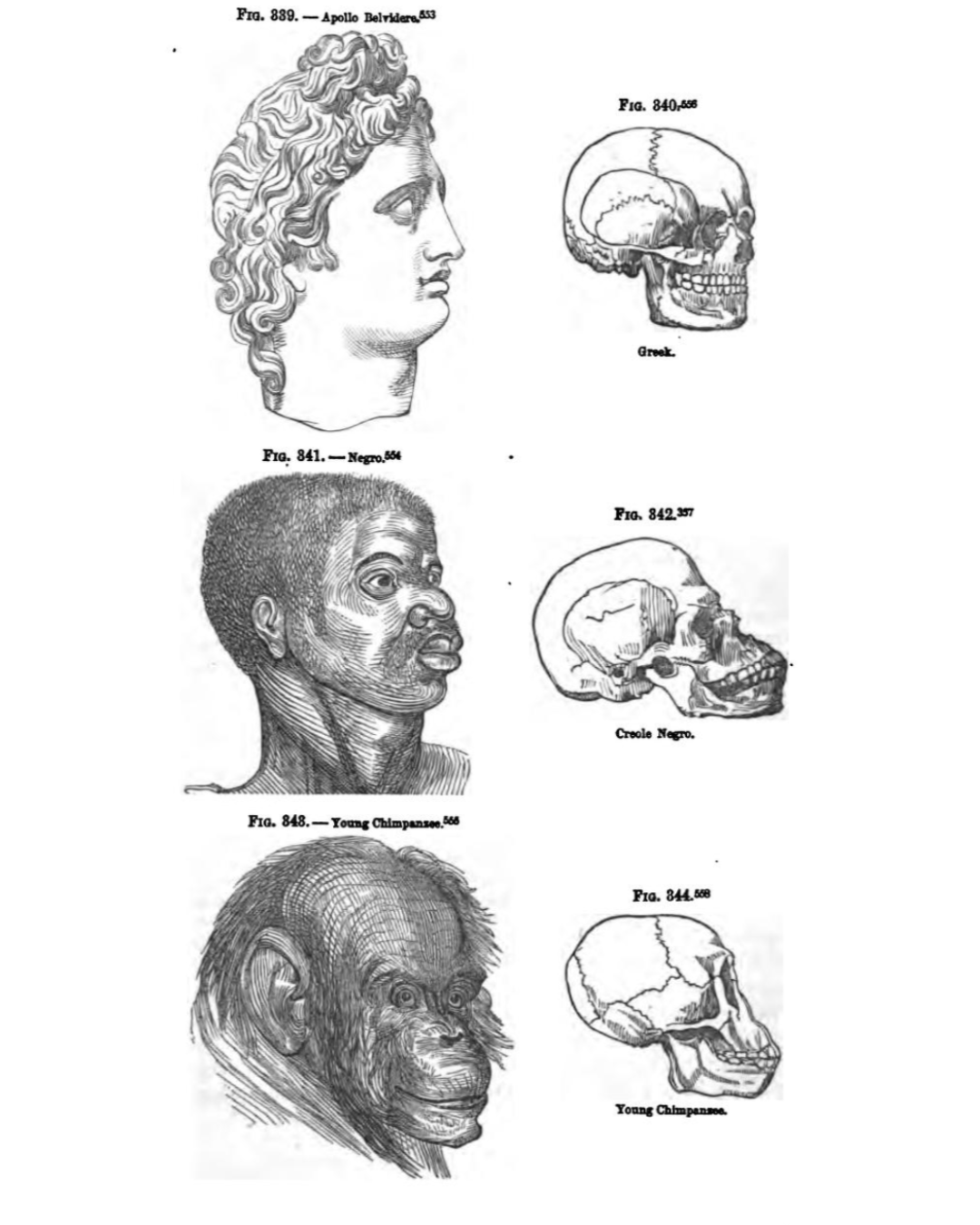
Figure 2: Page 458 from Josiah C. Nott and George R. Gliddon, Types of Mankind (Philadelphia: Lippincott, Grambo & Co., 1854). Digitised by Google from the Harvard University copy; hosted by Internet Archive. Public Domain.
Those who circulate these images today need not have read Winckelmann, since his aesthetic principles were long embedded in cultural institutions and practices of reproduction. Museums, plaster cast collections, and textbook illustrations reinforced the authority of the white classical body. Photography sealed this convention by presenting white sculpture against dark backgrounds in the medium’s first years.[xxi] The English scientist and photographic pioneer William Henry Fox Talbot noted that statues and busts are “well represented by the Photographic Art; and also very rapidly, in consequence of their whiteness,” and the bust in his plate was itself a plaster cast of a Roman marble (figure 3).[xxii] Fascism later fused this visual convention with racial science. The prologue to Leni Riefenstahl’s German propaganda film Olympia (1938) dissolves the Discobolus into a living athlete, presenting the classical body as the ancestor of the Aryan one.[xxiii] Long before the internet, the classical ideal circulated as a colourless reproduction of a reproduction.
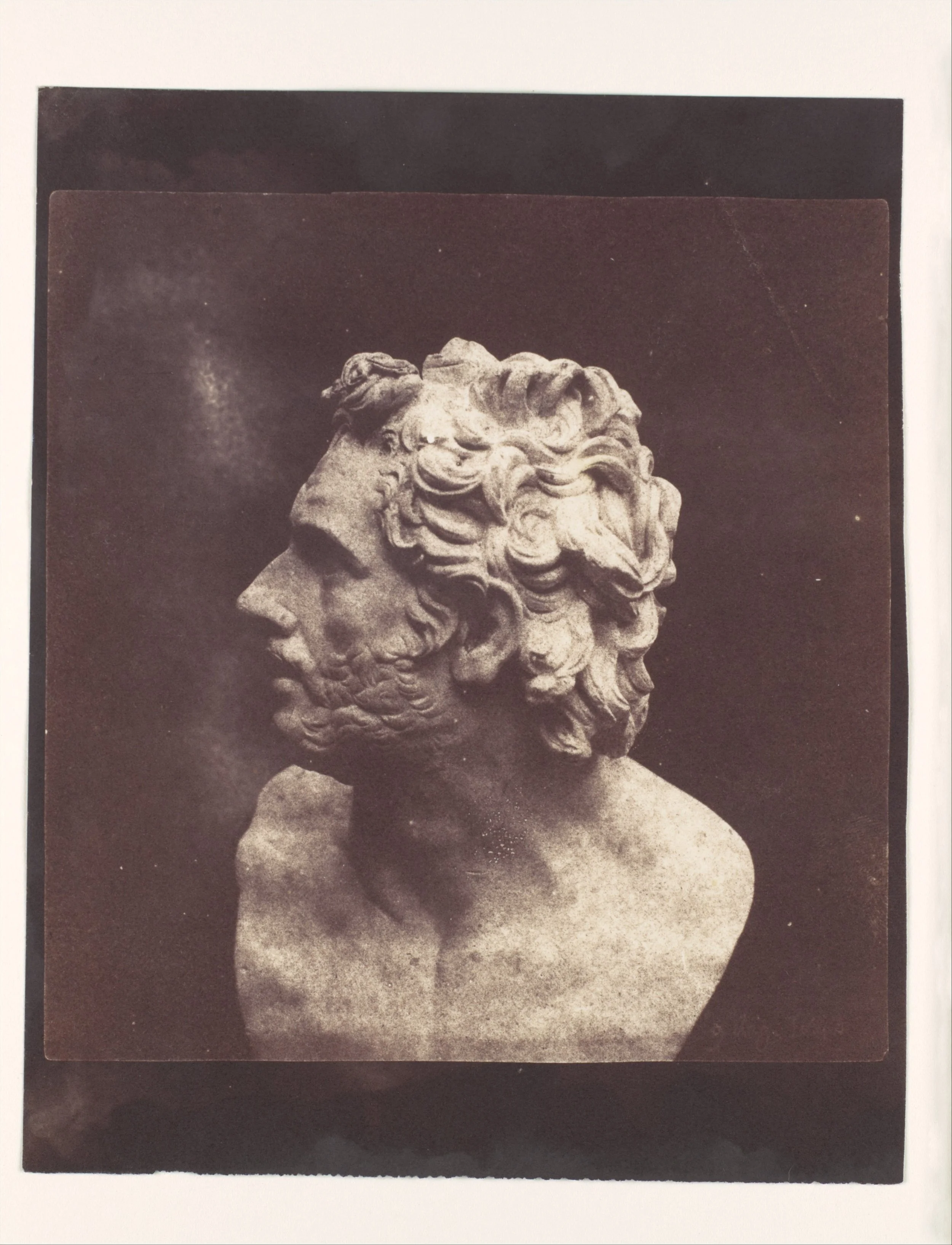
Figure 3: William Henry Fox Talbot, Bust of Patroclus, salted paper print from paper negative, 1843. The Metropolitan Museum of Art, New York. Public Domain.
White nationalist thought frequently combines the belief that modern society has declined from an idealised past with an understanding of race as biological inheritance and an emphasis on masculine strength, including the legitimacy of violence in its defence. Classical sculpture provides a visual expression of these interconnected beliefs. In Who Are We?, a 2016 promotional video for the NPI, Spencer contrasts a solitary man lost within a crowded modern city with images of the Parthenon and busts of Plato and Augustus. Its narration avoids explicit references to race, instead invoking “identity” and “ancestors” and declaring that “what our ancestors took for granted, we must discover, we must renew.”[xxiv] Classical sculpture therefore becomes a symbol of an idealised ancestral, masculine authority. Its abstracted form allows a historically constructed aesthetic ideal to appear as evidence of a shared racial inheritance. RETVRN condenses this logic into a single word. Even its Roman V is a borrowed letterform, so that the demand for return is itself a copy. Yet this supposed recovery of antiquity depends upon the reproduction of historical conventions and an idealised past that never existed in the form being claimed.[xxv]
Classical sculpture serves as both an imagined ancestor and a model of masculinity. “Trad” accounts combine images of heroic sculpture with appeals to self-improvement, encouraging followers to surpass the men of previous generations.[xxvi] This association between classical beauty and personal transformation predates the internet. Contemplating the Apollo Belvedere, Winckelmann described himself adopting an “elevated stance,” his chest seeming “to expand with veneration.” Eugen Sandow, an early celebrity bodybuilder, similarly posed as the Farnese Hercules in bronze body paint (figure 4), while his publicity credited the statue with inspiring his physical transformation.[xxvii] Within the online right, this tradition has acquired an explicitly political significance. Bronze Age Pervert, the pseudonymous author of Bronze Age Mindset (2018), promotes an ideal of virile, pagan masculinity through images of semi-nude white bodybuilders, while directing homophobic insults towards his opponents.[xxviii] As a result, classical imagery continues to legitimise the admiration of male beauty, even within a movement that condemns effeminacy.[xxix]
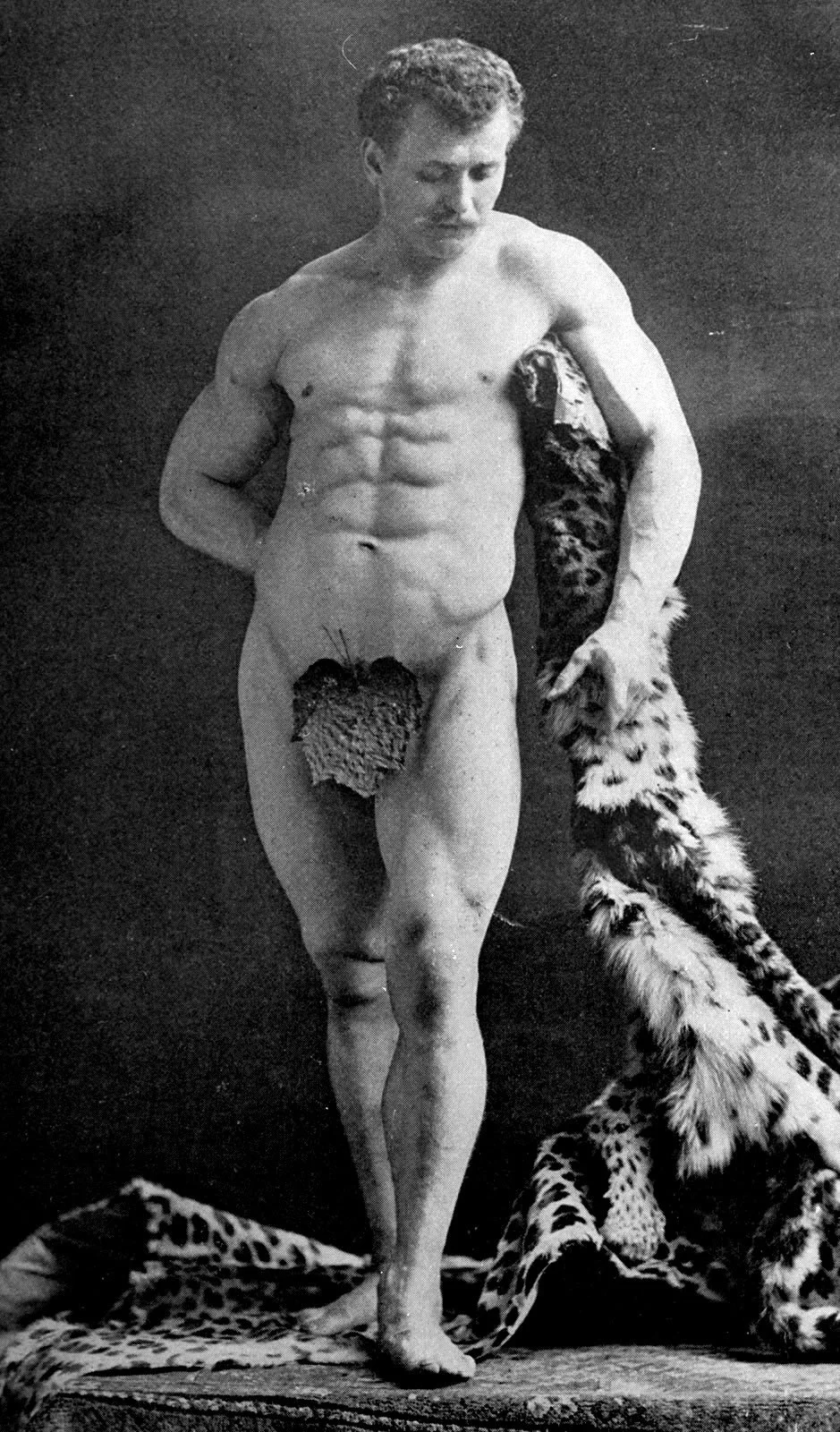
Figure 4: Napoleon Sarony, Eugen Sandow posing as the Farnese Hercules, photograph, 1883. Public Domain.
The debate over ancient polychromy challenges museum conventions, but Winckelmann’s praise of a “Moor” as beautiful while criticising the shape of his mouth reveals that correcting assumptions about pigmentation leaves the underlying aesthetic hierarchy intact. Through centuries of reproduction and display, the statue’s whiteness has become an unmarked norm, making a historically contingent aesthetic ideal appear natural and universal. As Alex Potts observes, the classical ideal offers “a common humanity lying beneath the clothing of social identity,” while determining which bodies can lay claim to that universality.[xxx] Reconstructing ancient appearances risks projecting modern racial categories onto antiquity rather than questioning how the classical ideal was formed.[xxxi] Restoring pigment changes the surface, but examining the process of abstraction reveals how that surface came to be accepted as historical truth.
Winckelmann’s image of ideal beauty as pure water, free of foreign matter, was an aesthetic metaphor, but its language of purity anticipates the distinctions through which the online right constructs racial identity. The whiteness of classical sculpture lends these claims apparent historical legitimacy. The Identity Evropa poster’s declaration that “Our Future Belongs to Us” invokes an idealised past already shaped by selection and exclusion. The purity of the classical ideal was never inherent. It was produced through the removal of particularity, a process concealed by the apparent universality of the resulting image.
Notes:
[i] Donna Zuckerberg, Not All Dead White Men: Classics and Misogyny in the Digital Age (Cambridge, MA: Harvard University Press, 2018), 1.
[ii] Curtis Dozier, The White Pedestal: How White Nationalists Use Ancient Greece and Rome to Justify Hate (New Haven: Yale University Press, 2026), 2; Eleanor Janega, “Nowhere to Retvrn: How Far-Right Revisionism Spreads Online,” Red Pepper, July 10, 2023; Tallulah Trezevant, “The Antiquity to Alt-Right Pipeline,” Working Classicists, n.d., accessed October 20, 2026.
[iii] Jordan McSwiney, Michael Vaughan, Annett Heft, and Matthias Hoffmann, “Memes in Far-Right Digital Visual Culture,” GNET Insights, August 20, 2021.
[iv] Carol C. Mattusch, “In Search of the Greek Bronze Original,” in The Ancient Art of Emulation: Studies in Artistic Originality and Tradition from the Present to Classical Antiquity, ed. Elaine K. Gazda (Ann Arbor: University of Michigan Press, 2002), 99–101.
[v] Sarah E. Bond, “The Argument Made by the Absence: On Whiteness, Polychromy, and Diversity in Classics,” Sarah E. Bond (blog), April 30, 2017.
[vi] Dozier, White Pedestal, 95; Bond, “Argument Made by the Absence.”
[vii] Johann Joachim Winckelmann, History of the Art of Antiquity, trans. Harry Francis Mallgrave (Los Angeles: Getty Research Institute, 2006), 194–96.
[viii] Alex Potts, Flesh and the Ideal: Winckelmann and the Origins of Art History (New Haven: Yale University Press, 1994), 160; David Batchelor, Chromophobia (London: Reaktion, 2000), 17, 22–23.
[ix] Winckelmann, History of the Art of Antiquity, 194; Potts, Flesh and the Ideal, 160–61.
[x] Frantz Fanon, Black Skin, White Masks, trans. Charles Lam Markmann (London: Pluto Press, 1986), 110.
[xi] Simone de Beauvoir, The Second Sex, trans. and ed. H. M. Parshley (London: Jonathan Cape, 1956), 16.
[xii] Potts, Flesh and the Ideal, 273n1; Batchelor, Chromophobia, 22–23.
[xiii] Potts, Flesh and the Ideal, 222–37.
[xiv] Ibid., 214.
[xv] Maria Wyke, “Herculean Muscle!: The Classicizing Rhetoric of Bodybuilding,” Arion, 3rd ser., 4, no. 3 (1997): 59–63.
[xvi] George L. Mosse, The Image of Man: The Creation of Modern Masculinity (New York: Oxford University Press, 1996), 29–32.
[xvii] Potts, Flesh and the Ideal, 159, 222–37; Mosse, Image of Man, 56–76.
[xviii] Mosse, Image of Man, 56–76.
[xix] J. C. Nott and George R. Gliddon, Types of Mankind (Philadelphia: Lippincott, Grambo, 1854), 458; Potts, Flesh and the Ideal, 162.
[xx] Philippa Levine, “States of Undress: Nakedness and the Colonial Imagination,” Victorian Studies 50, no. 2 (2008): 189–90.
[xxi] Dozier, White Pedestal, 2; Geraldine A. Johnson, “‘In Consequence of Their Whiteness’: Photographing Marble Sculpture from Talbot to Today,” in Radical Marble: Architectural Innovation from Antiquity to the Present, ed. J. Nicholas Napoli and William Tronzo (London: Routledge, 2018), 107–32.
[xxii] William Henry Fox Talbot, The Pencil of Nature (London: Longman, Brown, Green and Longmans, 1844–46), pl. V, “Bust of Patroclus.”
[xxiii] Olympia, part 1, Festival of Nation, directed by Leni Riefenstahl (Berlin: Olympia-Film, 1938).
[xxiv] Dozier, White Pedestal, 10–11, 88.
[xxv] Trezevant, “Antiquity to Alt-Right Pipeline”; Janega, “Nowhere to Retvrn.”
[xxvi] Trezevant, “Antiquity to Alt-Right Pipeline.”
[xxvii] Winckelmann, History of the Art of Antiquity, 334; Wyke, “Herculean Muscle!,” 54–55.
[xxviii] Graeme Wood, “How Bronze Age Pervert Charmed the Far Right,” Atlantic, August 3, 2023.
[xxix] Wyke, “Herculean Muscle!,” 59–63; Wood, “Bronze Age Pervert.”
[xxx] Potts, Flesh and the Ideal, 159.
[xxxi] Dozier, White Pedestal, 95.